
BYKKO Advocates For Tourism Friendly And Inclusive E-bike Regulations
21/04/2026BYKKO Advocates For Tourism Friendly And Inclusive E-bike Regulations
21/04/2026An untold growth story.
Shared or privately owned, the e-bike has quietly become one of the great growth stories in Australian transport. Shared e-bike trips in New South Wales nearly doubled in 2025, and roughly 600,000 residents now reach for one every month.1 National e-bike sales have climbed from around 9,000 in 2017 to close to 300,000 this year; and volumes are forecast to exceed 650,000 a year by 2035.2
This is no longer a novelty. It is a category maturing into mainstream transport.
Interestingly, over the very same period, another micromobility device went into retreat. Shared e-scooters were pulled out of city after city – Melbourne withdrew them almost overnight in September 2024, Perth stripped around a thousand from its streets after a fatal crash, Bendigo removed hundreds after riders simply didn’t turn up, and Hobart will replace them with e-bikes .1 3 Similar underlying technology. Opposite outcomes.
3.7 million
NSW shared e-bike trips(2025)
300K
National e-bike sales (2026)
$1.3 billion
Market value (2026)
Better the electric bike you know?
As a recent essay in The Economist — “Show a liberal a Lime bike and he will show you his soul” — put it, the e-bike has become something of a cultural Rorschach test: to some it is the clean, democratic future of city travel; to others it is street clutter and footpath roulette.4 In the same way, privately owned e-bikes represent freedom of movement for many; for others is an act of defiance of the road rules and public authority. The public reacts mainly to the later.
All of these are responses to the same object seen from different angles. But underneath the noise, the backlash is not really against electric two-wheelers at all. It is against three specific issues.
The first is space. Micromobility is competing for scarce room in cities built around the car, so anything left lying across a footpath is felt acutely — the clutter is real, and it is public.
The second is overpowered machines: a flood of “motorbikes pretending to be e-bikes,” privately owned, throttle-driven and well beyond the legal 25 km/h, 250-watt threshold, too often ridden by rebelling teenagers on public roads. The rising injuries that follow are what fuel the moral panic and have governments reaching for a show of strength. The reaction can be visceral. Police forces in Australia, Britain and the United States have all filmed themselves crushing seized electric bikes and scooters deemed too fast or too dangerous — in Western Australia, dozens were fed to an excavator’s claw during a single operation early in 2026.5
The third is responsibility. In shared mobility, when no one owns the asset, it becomes no one’s job to park it or care for it — the “not my bike” problem that turns a convenient device into a nuisance.4 With devices scattered across cities, it becomes impossible for the operator to take care of every single bike.
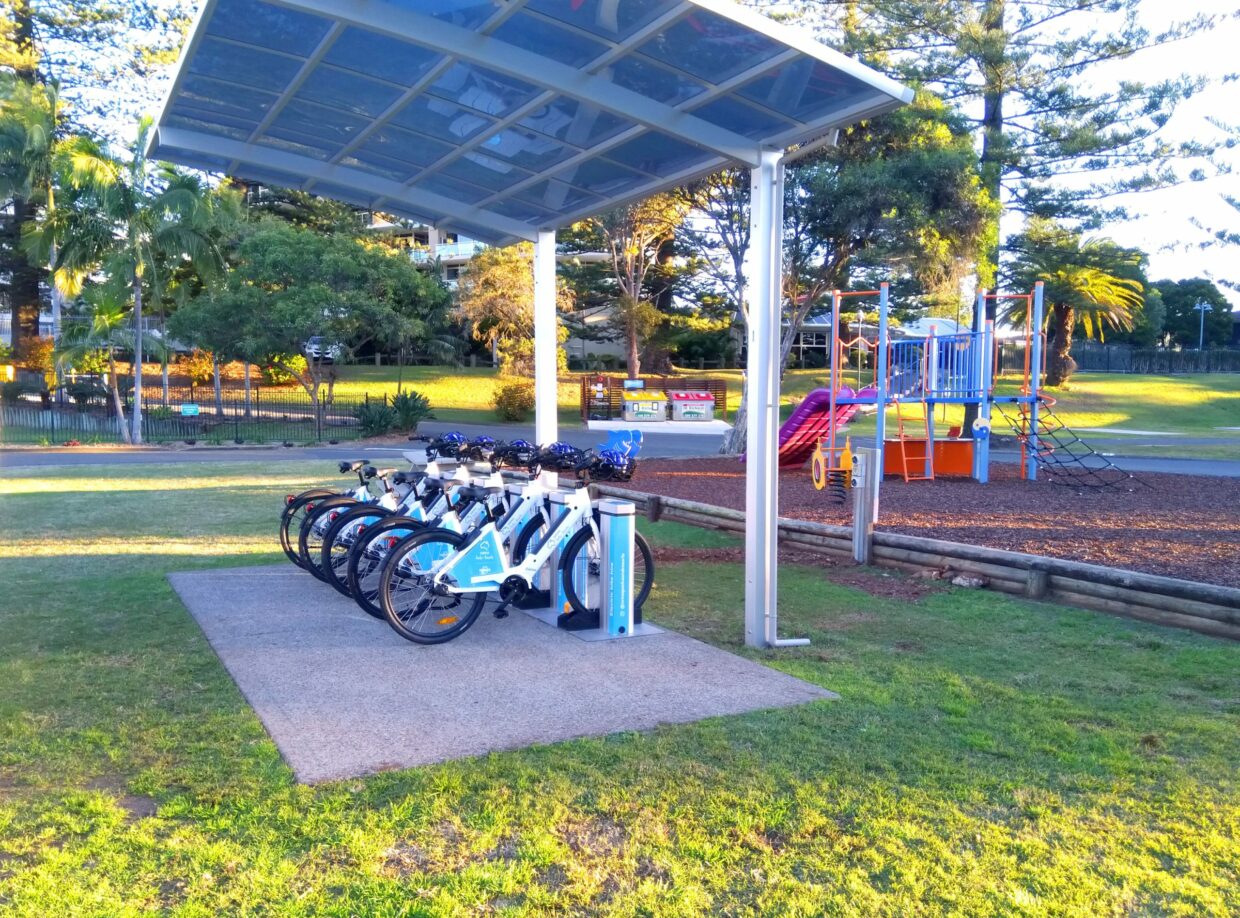
None of those three is inevitable. The clutter problem is a parking problem: a bike that docks and locks in a place designed for it doesn’t end up on its side across a footpath.
The overpowered-machine problem is really a compliance problem, and Australia’s regulators have read it correctly: the move to make every e-bike meet the European EN 15194 standard – 250 watts, 25 km/h, anti-tampering and genuine battery-safety requirements – draws a hard line between a legitimate bicycle and an unregistered motorcycle.2
And the responsibility problem is a charging-and-management problem: when bikes return to purpose-built infrastructure that charges them safely and keeps them accounted for, the bikes never find their way in a gutter, a driveway, a tree or under water.
Premium, legal e-bikes, with charging and parking technology built for them, answer all three.
Better the electric bike you know? We believe so.
Micromobility that actually endures.
We now have a decade of shared-mobility boom and bust to learn from. The first venture-fuelled wave – the operators that scattered low-quality bikes by the thousand and burned capital to do it – mostly failed on asset depreciation and brutal price competition; the survivors carry heavy debts and thin margins, a dynamic dissected in the same Economist essay on the economics of Lime and its former rivals.4
Strip the debate back and the systems that last tend to share the same handful of principles: clear accountability for every bike, safe and purpose-built charging, no clutter, smart battery management, and genuine compliance. Meet those, and nearly every objection to micromobility falls away. No street clutter. No flat batteries. No ambiguity about who is responsible. The e-bike is finally a transport mode with the infrastructure it needs.
There is a sustainability point that rarely gets made. The greenest fleet is not the biggest one; it is the best-utilised one. A bike that is charged, maintained and actually ridden displaces car trips, reduces congestion and tells a real low-emissions story. A damaged bike lying in a gutter with a dead battery displaces nothing but goodwill. Well-managed infrastructure is not only the more durable economic model – it is the more genuinely sustainable one.
What this means beyond the city.
For the hospitality and property sector, none of this is an abstract policy debate. It is a preview. The same dynamics cities are wrestling with play out, at a smaller scale, the moment a property leaves unmanaged hire bikes by its entrance: they get dumped, they run flat, and the batteries end up charging somewhere they never should.
A private, EN 15194-compliant fleet, docked and charged on purpose-built infrastructure, gives guests and residents the entire upside of the e-bike boom — freedom to explore, a credible sustainability story, an activity for every age and ability — without importing the downside that has cities pulling vehicles off the street. Accountability, safe charging, no clutter, sound battery management, compliance: the same five principles, delivered at property scale.
That is the thesis BYKKO was built on. The future of shared electric mobility was never going to be more bikes on more footpaths. It is better infrastructure: bikes that are charged, accountable and cared for, owned by someone with a reason to look after them.
Two wheels are good. But it was never really about the wheels. It is about the system that runs them.
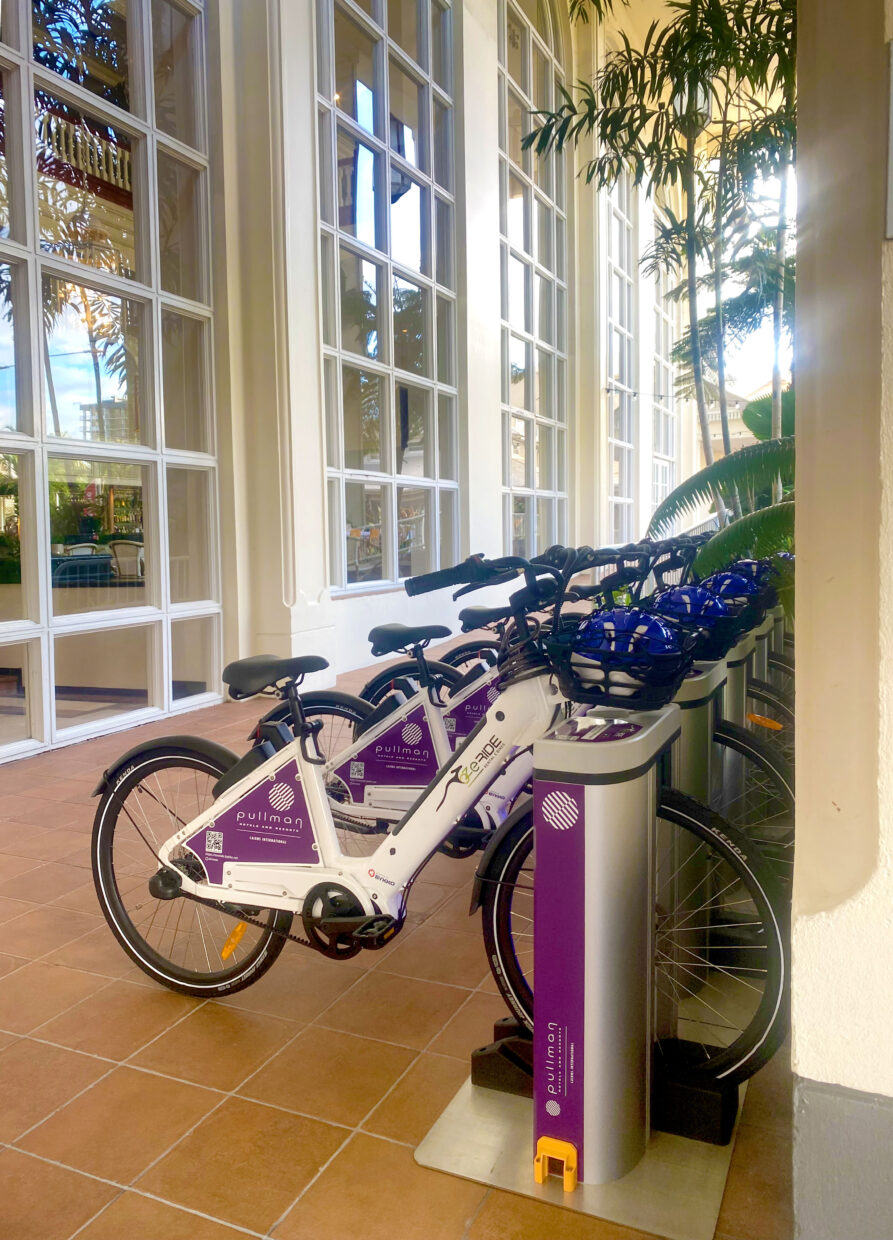
BYKKO is Australia’s only station-based e-bike hire infrastructure provider. Our system is purpose-built for hospitality, residential, commercial enterprise and smart precincts. BYKKO’s fully automated, fast-charging stations and intelligent docking technology keep e-bikes charged, secured and customer-ready.
Sources
- “Why police are now sending some confiscated electric bikes to the crusher,” Electrek, 14 January 2026 (WA Police Operation Moorhead). https://electrek.co/2026/01/14/why-police-are-now-sending-some-confiscated-electric-bikes-to-the-crusher/
2. The Guardian, “Rental ebike programs booming in Australian cities as e-scooter moral panic sees take-up stall,” 15 February 2026. https://www.theguardian.com/australia-news/2026/feb/15/rental-ebike-programs-booming-in-australian-cities-as-e-scooter-moral-panic-sees-take-up-stall
3. NRMA (Open Road), “Australian e-bike industry to exceed $1 billion in 2026,” 2026 — data attributed to Expert Market Research and Bicycle Industries Australia. https://www.mynrma.com.au/open-road/news/2026/australian-e-bike-sales-2026
4. The Economist, “Show a liberal a Lime bike and he will show you his soul,” 1 July 2026. https://www.economist.com/business/2026/07/01/show-a-liberal-a-lime-bike-and-he-will-show-you-his-soul
5. Stephen Coulter, “Sydney’s e-bike boom, carrying Australian micromobility as e-scooters retreat,” LinkedIn, 2026. https://www.linkedin.com/pulse/sydneys-e-bike-boom-carrying-australian-e-scooters-retreat-coulter-coitc/
“The future of shared micromobility was never going to be more bikes on more footpaths. It is better infrastructure: bikes that are charged, accountable and cared for, owned by someone with a reason to look after them.”
Monica Zarafu – CEO & Founder, BYKKO